By 2026, everything was different in the world of fashion. For the founders of brands, the same methods are no longer effective. In this new era, you can no longer just find the least expensive factory and call it a day. You need quickness and clear communication. However, you still have a major issue.
We hear this complaint from new clients daily. You have an idea. You have a design. But it seems impossible to turn that into real clothes. You are looking for good china manufacturing companies clothing, but there are so many options.
Most suppliers boast their full range of services, but in reality, very few of them actually do so. Every company has its own constraints and costs, so reliable outside help becomes essential. At ChengLin Clothing, we have over 27 years behind doing things another way. At this stage, we believe in a "one-stop-shop" for the future.
Key Takeaways
Real Full-Service (FPP): The true partner does not subcontract. They take care of design, tech packs, and shipping directly to you.
The "Project Manager" Trap: The use of multiple vendors results in trouble managing resources instead of getting on with scaling up.
Vetting is Critical: Always ask about quality control, sampling rules, and certifications like BSCI or OEKO-TEX.
MOQs Matter: Partner with factories that have low minimum order quantity (like our 50 pieces limit) to try out the market.
Certifications: Make sure your partner provides audits that demonstrate fair labor practices and usage of safe materials.
What "Full-Service" Actually Means (The Complete Checklist)
Many founders are in difficulty with this idea. They are not sure how to evaluate the services of a manufacturer.
What you are looking for is Full Package Production (FPP). Some people see it as "vertical integration" manufacturing. The essence is straightforward. The factory does every task on its own. They do not send any work to other companies.
Most china garment producers promote themselves as full-service. Few
materials are, though. To distinguish them, watch for signs. Real clothing manufacturers integrate all the stages:
1.Design Assistance & Tech Pack Creation: They create tech packs ready for production based on your sketches or photos.
2.Fabric & Material Sourcing: They obtain fabric, zippers, labels, and buttons. You don’t need to do anything.
3.Sampling & Prototyping: They create a physical sample and make any adjustments needed until it's right for you to approve it.
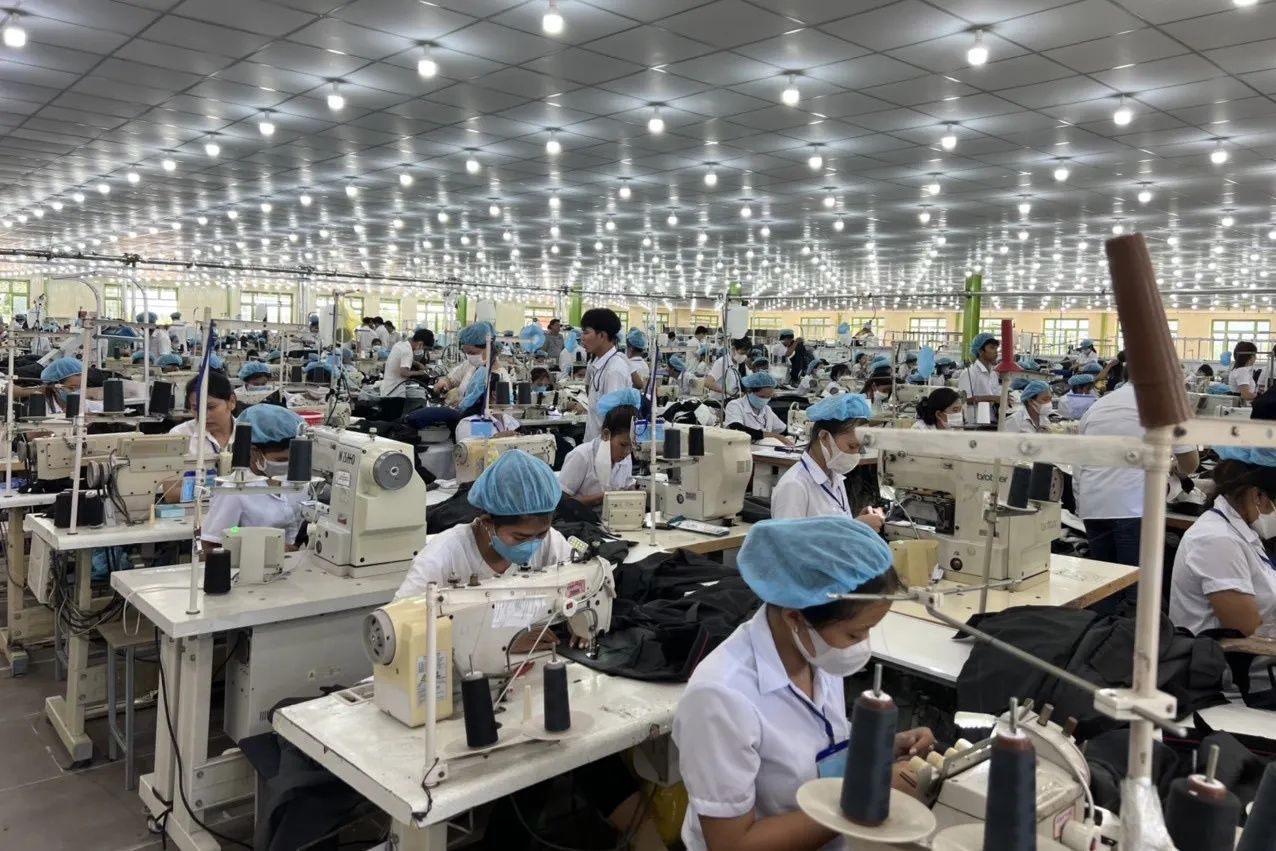
4.Bulk Cut-and-Sew Production: They cut, sew, and assemble all in-house. They do not send it to another factory.
5.Quality Control (QC): They look into the issues at multiple stages like checking fabric during production, and before packing. Often, the middlemen skip this step.
6.Private Labeling & Custom Packaging: They print and apply your tags, stickers, and custom bags in one place.
7.International Shipping & Logistics: They do the door-to-door delivery, customs forms, and freight. You won't need to think about it.
A manufacturer that cannot verify all the seven points is not a one-stop factory for sure.
Why This Matters More Than Price: The "Project Manager" Trap
If you separate your production into different channels, you actually create more work for yourself.
Think of it this way: one vendor for fabric, another for sewing, another for labels, and the last one is for shipping. All of a sudden, you are the project manager. You run after deadlines. You have to fix issues between the suppliers. You have to deal with all the delays.
When the fabric comes in late to the sewer, they charge an extra fee. If the labels arrive wrongly, the packaging team halts their work. Quality issues become more difficult to track. Everything takes longer.
Having everything under a single roof prevents such a burden. At one point, there's just one person in charge of everything. When something goes wrong—and it will—you get results. You won't get excuses.
What to Look for When Vetting a Full-Service Manufacturer
You should ask very specific details before making a commitment. Do not just rely on what the website says. Here are questions to be added for possible china manufacturing companies clothing:
"Do you source the fabric yourself, or should I send it to you?"
"Can you make a tech pack from a photo, or do I need to provide one?"
"What are the quality control measures you have at every stage?"
"Do you deal with shipping and customs forms, or do I need a separate shipper?"
"What certifications do you have?"
Be on the lookout for these red flags:
Non-direct answers to where the work happens.
No sample policy or vague revision terms.
No mention of quality control during production.
Minimum orders in the thousands. This often means they rely on outside factories.
For more details on vetting, check out industry guides on the Top China Clothing Manufacturer guide. It covers similar quality standards.
A Concrete Example: ChengLin's Six-Stage Production Model
One manufacturer that fits the full-service profile is ChengLin Clothing (Dongguan ChengLin Clothing Co., Ltd.).
We're located in Dongguan, China, and we've been operating since 1998. That is over 27 years of being in the clothing manufacturing business. We work with brands from the USA, UK, Australia, and other countries. Our in-house staff is comprised of 200 employees.
A primary difference with us is that we uniquely state an MOQ of 50 pieces per style. This is very competitive as a low MOQ for a Chinese factory with full-service capabilities. Typically, such requirements are between 300-500 pieces.
Our certifications include TUV, OEKO-TEX, GOTS, and GRS. These are audit-proven certificates and therefore both product quality and ethical production are assured. We also have a BSCI certificate that covers labor conditions. For some US companies, this combination is essential for import rules and brand image.
It is worth mentioning the 50-piece MOQ. Most full package china garment producers have set MOQs that are often impossible for emerging brands to meet. At the same time, our low threshold makes it feasible to get full-service manufacturing without enormous upfront costs.
How to Find Reliable Manufacturers (Beyond Alibaba)
Most brand founders start on Alibaba. It is effective, but it is mostly a catalog. To find true FPP partners, a better search strategy is needed.
Use specific search terms that filter out middlemen:
"Full package clothing manufacturer" + your category (like "streetwear").
"Cut and sew manufacturer with tech pack support."
"Private label clothing manufacturer with in-house sampling."
"OEM ODM clothing manufacturer" (OEM/ODM means factory-level ability).
Check Directory Platforms:
MakersRow: It is best for factories based in the US. Some Chinese factories are also listed.
Sewport: This global directory provides a list of factories with detailed service descriptions.
Alibaba: Always search for "Gold Supplier" and "Trade Assurance" marks. Filter results for factories-only, not trading companies.
Once you come across a candidate, request their factory audit report. Also, ask for client references in your product type. Always begin with a small sample order before bulk. For other options in the area, check the 6 Best Clothing Manufacturers in China review to compare capabilities.
Bottom Line
The best full-service clothing manufacturer for your brand is one that handles all seven production stages internally. They must offer clear certifications, a documented sample policy, and a minimum order that fits your growth stage.
For US brands sourcing from china manufacturing companies clothing, ChengLin Clothing is a proven example of this model. With 27 years of operation, a 50-piece MOQ, and a six-stage in-house workflow, we aim to be the partner that simplifies your supply chain.
The common misunderstanding we observe is that brands give orders to the cheapest supplier, who outsources production to others. As a result, they find themselves spending months solving a broken supply chain. Collaborate with a partner that owns the process, thus you can own the brand.
FAQ: Common Questions About Manufacturing in China
1. What is the difference between OEM and ODM in china garment producers?
OEM (Original Equipment Manufacturer) means the factory makes designs based exactly on your specs. You provide the design; they make it. ODM (Original Design Manufacturer) means the factory provides pre-designed products that you can brand with your logo. At ChengLin, we offer "One-stop OEM customization service," meaning we build your unique vision from scratch.
2. Why do most china manufacturing companies clothing have high MOQs?
Factories have high setup costs. Cutting fabric and setting up assembly lines takes time. To make a profit, factories usually need runs of 300 to 500 units. However, ChengLin offers a 50-piece MOQ to support emerging brands, viewing it as an investment in a long-term partnership.
3. How can I ensure ethical labor practices when sourcing from China?
You should look for third-party social compliance audits. The BSCI (Business Social Compliance Initiative) certification is a strong standard. It verifies fair wages, safe working conditions, and no child labor. Always ask a manufacturer to show their current BSCI or similar audit reports.
4. How long does the sampling process typically take?
For a full-service manufacturer, sampling usually takes 7 to 14 days after fabrics are sourced. This allows time for pattern making, cutting, sewing, and initial QC. Be wary of factories promising samples in 1-2 days, as quality often suffers.
5. Do I need a freight forwarder if I use a full-package manufacturer?
If you use a true FPP partner, you often don't need one. A full-service factory handles the logistics, including customs clearance and duties (DDP shipping). This saves you the hassle of hiring a separate logistics agent. For more insights on top players in the market, check out this list of 10 Best Clothing Manufacturers in China.